
How to Design a Montessori Bedroom for Babies and Toddlers
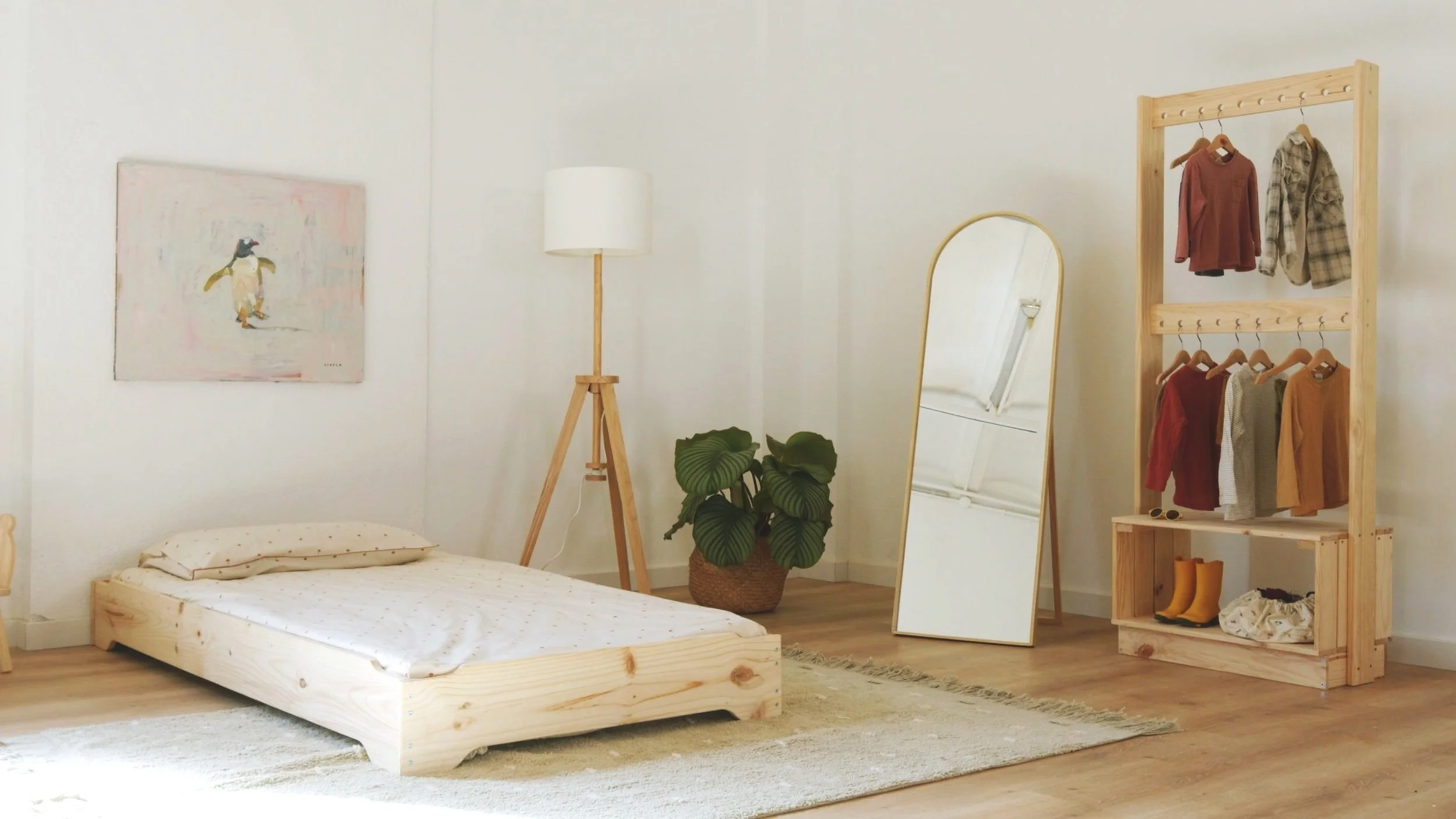
The first environment a baby or toddler experiences at home plays a fundamental role in their sense of safety, independence, and development. A Montessori-inspired bedroom is designed to support these early stages through intentional simplicity, accessibility, and freedom of movement.
Rather than focusing on decoration or trends, the goal is to create a space that responds to the child’s developmental needs.
The role of independence in early development
From infancy through toddlerhood, children are driven by a natural need to explore movement, develop coordination, and engage with their environment.
A well-designed bedroom can support this development by encouraging:
Freedom of movement
Early autonomy in daily rhythms
Self-initiated exploration
Calm, focused engagement with space
The environment should support development without overstimulation or unnecessary restriction.
Key principles of a Montessori bedroom
These are the foundational design principles used in Montessori-inspired spaces for babies and toddlers:
1. Floor-level sleep space
A floor bed or low sleeping surface allows the child to move independently in and out of bed when developmentally ready. This supports body awareness and autonomy over time.
For babies, adaptations depend on safety and developmental stage.
2. Accessibility at child level
Furniture and storage should be designed at the child’s height when possible.
This includes:
low shelves
open storage
reachable materials
Accessibility supports independence and participation in their environment.
3. Intentional selection of materials
Instead of many toys, a small, curated selection of developmentally appropriate materials is recommended.
This supports:
concentration
deeper engagement
reduced overstimulation
Rotation of materials can be more effective than quantity.
4. Clear and open floor space
Open space allows for:
crawling
walking
rolling
independent movement exploration
Movement is a key part of early cognitive and physical development.
5. Natural and calming materials
Using materials such as wood, cotton, and natural textures helps create a visually calm and sensory-balanced environment that supports regulation.
Common mistakes in baby and toddler bedrooms
Some frequent challenges include:
Overfilling the space with toys or objects
Using tall or closed storage systems
Designing primarily for adult convenience
Overstimulating colors, lights, or patterns
A simpler environment often supports development more effectively.
Designing for development, not decoration
A Montessori bedroom is not defined by style. It is defined by intention.
A useful guiding question is:
“Does this space support the child’s autonomy, movement, and development at their current stage?”
When design decisions are guided by development rather than aesthetics alone, the space becomes supportive rather than overwhelming.
How this connects to Sínia Spaces
At Sínia Courses, we guide families through Montessori-inspired space design so they can confidently create intentional environments at home. Learn how to design spaces for babies and toddlers that foster independence, creativity, and hands-on exploration.
At Sínia Design, we create fully tailored Montessori-inspired bedrooms and home environments designed around your child’s developmental needs and your family’s space.